
主题
任务
关于在 CrewAI 框架内管理和创建任务的详细指南。
概述
在 CrewAI 框架中,Task 是由 Agent 完成的具体任务指派。
任务提供了执行所需的全部必要细节,例如描述、负责的智能体、所需工具等,从而支撑各种复杂度的操作。
CrewAI 中的任务可以具有协作性,需要多个智能体共同完成。这通过任务属性来管理,并由团队的流程进行编排,从而提升团队协作与效率。
NOTE
CrewAI AMP 在 Crew Studio 中提供了可视化任务构建器,可简化复杂任务的创建与串联。无需编写代码,即可可视化地设计任务流程并实时测试。
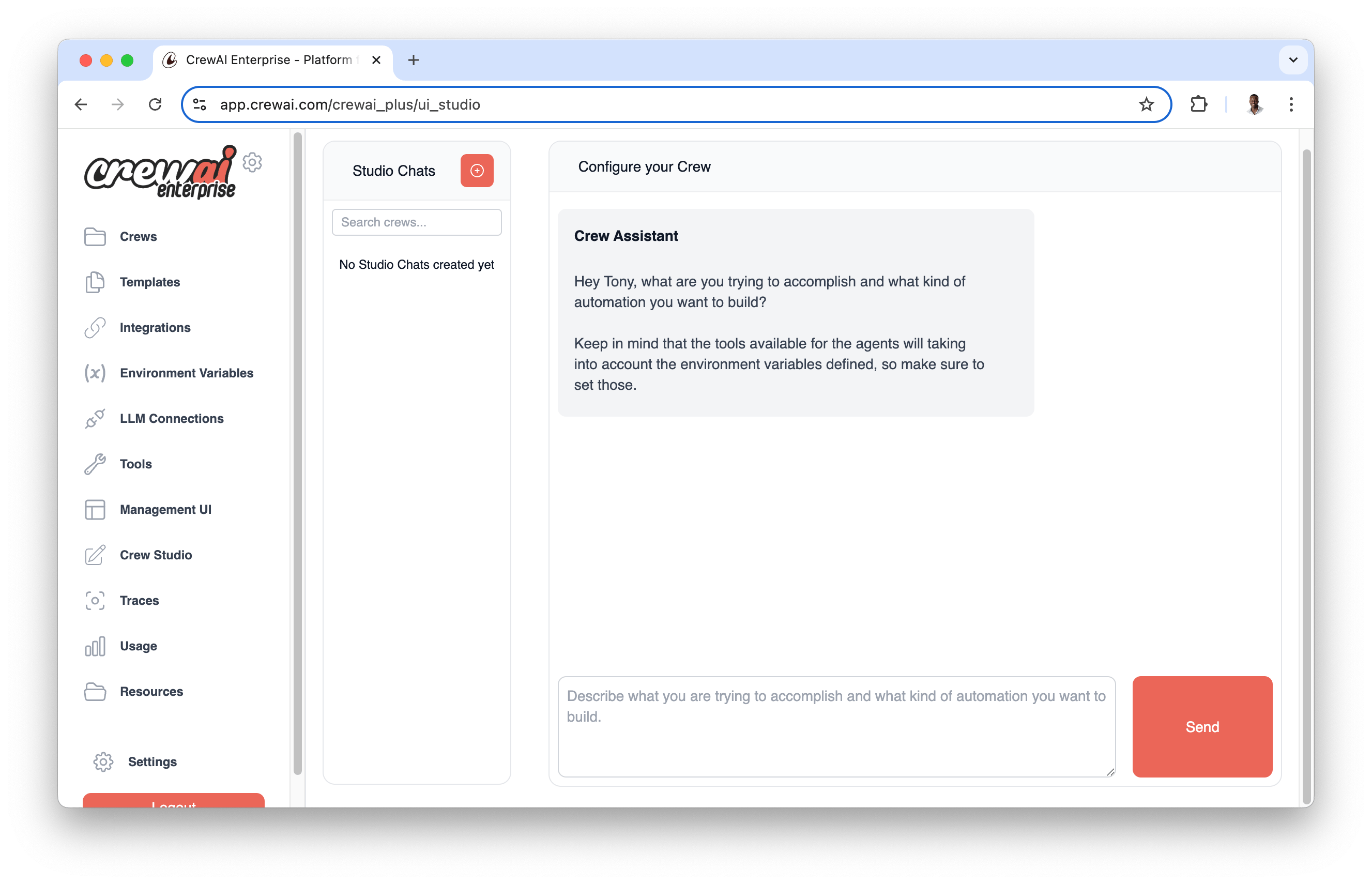
可视化任务构建器支持:
- 拖拽式任务创建
- 可视化任务依赖与流程
- 实时测试与验证
- 便捷的分享与协作
任务执行流程
任务可以通过两种方式执行:
- 顺序流程:任务按定义的顺序依次执行
- 层级流程:根据智能体的角色和专长将任务分配给它们
执行流程在创建团队时定义:
python
crew = Crew(
    agents=[agent1, agent2],
    tasks=[task1, task2],
    process=Process.sequential  # or Process.hierarchical
)任务属性
| 属性 | 参数 | 类型 | 描述 |
|---|---|---|---|
| 描述 | description | str | 对任务内容的清晰简洁说明。 |
| 预期输出 | expected_output | str | 对任务完成形态的详细描述。 |
| 名称 (可选) | name | Optional[str] | 任务的名称标识符。 |
| 智能体 (可选) | agent | Optional[BaseAgent] | 负责执行该任务的智能体。 |
| 工具 (可选) | tools | List[BaseTool] | 该智能体在此任务中限定使用的工具/资源。 |
| 上下文 (可选) | context | Optional[List["Task"]] | 其他任务,其输出将作为该任务的上下文。 |
| 异步执行 (可选) | async_execution | Optional[bool] | 任务是否应异步执行。默认为 False。 |
| 人工输入 (可选) | human_input | Optional[bool] | 任务是否需要人工审核智能体的最终答案。默认为 False。 |
| Markdown (可选) | markdown | Optional[bool] | 任务是否应指示智能体以 Markdown 格式返回最终答案。默认为 False。 |
| 配置 (可选) | config | Optional[Dict[str, Any]] | 任务特定的配置参数。 |
| 输出文件 (可选) | output_file | Optional[str] | 用于存储任务输出的文件路径。 |
| 创建目录 (可选) | create_directory | Optional[bool] | 若 output\_file 的目录不存在,是否创建该目录。默认为 True。 |
| 输出 JSON (可选) | output_json | Optional[Type[BaseModel]] | 用于结构化 JSON 输出的 Pydantic 模型。 |
| 输出 Pydantic (可选) | output_pydantic | Optional[Type[BaseModel]] | 用于任务输出的 Pydantic 模型。 |
| 回调 (可选) | callback | Optional[Any] | 任务完成后执行的函数/对象。 |
| 护栏 (可选) | guardrail | Optional[Callable] | 在进入下一个任务之前验证任务输出的函数。 |
| 护栏 (可选) | guardrails | Optional[List[Callable]] | 在进入下一个任务之前验证任务输出的护栏列表。 |
| 护栏最大重试次数 (可选) | guardrail_max_retries | Optional[int] | 护栏验证失败时的最大重试次数。默认为 3。 |
NOTE
任务属性 max_retries 已废弃,将在 v1.0.0 中移除。 请改用 guardrail_max_retries 来控制护栏失败时的重试次数。
创建任务
在 CrewAI 中创建任务有两种常见方式:使用 JSONC 项目配置(推荐用于新团队),或直接在代码中定义任务。
JSONC 配置(推荐)
使用 crewai create crew <name> 创建的新项目在 crew.jsonc 中定义任务。agents 数组指向 agents/ 中的文件,tasks 数组定义团队应按顺序执行的工作。
按照安装部分所述创建 CrewAI 项目后,编辑生成的 crew.jsonc。
NOTE
在任务的 description、expected_output 和 output_file 中使用 {placeholder} 值。将默认值放在顶层的 inputs 对象中;crewai run 会提示补全缺失的值。
下面是一个包含两个有序任务的 crew.jsonc 示例:
jsonc
{
  "name": "Research Crew",
  "agents": ["researcher", "reporting_analyst"],
  "tasks": [
    {
      "name": "research_task",
      "description": "Conduct thorough research about {topic}. Include current and relevant information.",
      "expected_output": "A list of the most relevant information about {topic}.",
      "agent": "researcher"
    },
    {
      "name": "reporting_task",
      "description": "Review the research and expand it into a detailed report.",
      "expected_output": "A polished markdown report without fenced code blocks.",
      "agent": "reporting_analyst",
      "context": ["research_task"],
      "markdown": true,
      "output_file": "report.md"
    }
  ],
  "inputs": {
    "topic": "AI Agents"
  }
}每个任务都必须包含 description 和 expected_output。agent 的值应与 agents 中列出的智能体名称一致。context 是先前任务名称的列表;不接受前向引用,以便顺序上下文保持明确。
任务条目支持任何公开的 Task 字段。常见字段包括 name、agent、context、output_file、tools、human_input、async_execution、guardrail、guardrails、guardrail_max_retries、markdown、input_files、output_json、output_pydantic、response_model 和 converter_cls。对于条件任务,请使用 "type": "ConditionalTask" 并配合 condition 字段。
经典 YAML 配置
使用 crewai create crew <name> --classic 创建的经典项目使用 config/tasks.yaml 以及 crew.py 中的 @CrewBase 类。对于现有的 YAML 项目或偏好基于装饰器的 Python 装配方式的团队,此方式仍受支持。
直接在代码中定义(替代方式)
或者,你也可以不使用 YAML 配置,直接在代码中定义任务:
python
from crewai import Task

research_task = Task(
    description="""
        Conduct a thorough research about AI Agents.
        Make sure you find any interesting and relevant information given
        the current year is 2025.
    """,
    expected_output="""
        A list with 10 bullet points of the most relevant information about AI Agents
    """,
    agent=researcher
)

reporting_task = Task(
    description="""
        Review the context you got and expand each topic into a full section for a report.
        Make sure the report is detailed and contains any and all relevant information.
    """,
    expected_output="""
        A fully fledge reports with the mains topics, each with a full section of information.
    """,
    agent=reporting_analyst,
    markdown=True,  # Enable markdown formatting for the final output
    output_file="report.md"
)TIP
直接指定 agent 来分配任务,或者让 hierarchical 的 CrewAI 流程根据角色、可用性等来决定。
任务输出
理解任务输出对于构建高效的 AI 工作流至关重要。CrewAI 通过 TaskOutput 类提供了一种结构化的任务结果处理方式,它支持多种输出格式,并且可以轻松地在任务之间传递。
在 CrewAI 框架中,任务的输出被封装在 TaskOutput 类中。该类提供了一种结构化的方式来访问任务结果,包括原始输出、JSON 和 Pydantic 模型等多种格式。
默认情况下,TaskOutput 只包含 raw 输出。只有当原始 Task 对象分别配置了 output_pydantic 或 output_json 时,TaskOutput 才会包含 pydantic 或 json_dict 输出。
任务输出属性
| 属性 | 参数 | 类型 | 描述 |
|---|---|---|---|
| 描述 | description | str | 任务的描述。 |
| 摘要 | summary | Optional[str] | 任务摘要,由描述的前 10 个词自动生成。 |
| 原始 | raw | str | 任务的原始输出。这是输出的默认格式。 |
| Pydantic | pydantic | Optional[BaseModel] | 表示任务结构化输出的 Pydantic 模型对象。 |
| JSON 字典 | json_dict | Optional[Dict[str, Any]] | 表示任务 JSON 输出的字典。 |
| 智能体 | agent | str | 执行该任务的智能体。 |
| 输出格式 | output_format | OutputFormat | 任务输出的格式,选项包括 RAW、JSON 和 Pydantic。默认是 RAW。 |
| 消息 | messages | list[LLMMessage] | 上次任务执行产生的消息。 |
任务方法与属性
| 方法/属性 | 描述 |
|---|---|
| json | 如果输出格式为 JSON,则返回任务输出的 JSON 字符串表示。 |
| to_dict | 将 JSON 和 Pydantic 输出转换为字典。 |
| str | 返回任务输出的字符串表示,优先级为 Pydantic、JSON、raw。 |
访问任务输出
任务执行后,可以通过 Task 对象的 output 属性访问其输出。TaskOutput 类提供了多种方式与该输出交互并呈现它。
示例
python
# Example task
task = Task(
    description='Find and summarize the latest AI news',
    expected_output='A bullet list summary of the top 5 most important AI news',
    agent=research_agent,
    tools=[search_tool]
)

# Execute the crew
crew = Crew(
    agents=[research_agent],
    tasks=[task],
    verbose=True
)

result = crew.kickoff()

# Accessing the task output
task_output = task.output

print(f"Task Description: {task_output.description}")
print(f"Task Summary: {task_output.summary}")
print(f"Raw Output: {task_output.raw}")
if task_output.json_dict:
    print(f"JSON Output: {json.dumps(task_output.json_dict, indent=2)}")
if task_output.pydantic:
print(f"Pydantic Output: {task_output.pydantic}")Markdown 输出格式
markdown 参数可为任务输出启用自动 Markdown 格式化。设置为 True 时,任务会指示智能体使用正确的 Markdown 语法格式化最终答案。
使用 Markdown 格式化
python
# Example task with markdown formatting enabled
formatted_task = Task(
    description="Create a comprehensive report on AI trends",
    expected_output="A well-structured report with headers, sections, and bullet points",
    agent=reporter_agent,
    markdown=True  # Enable automatic markdown formatting
)当 markdown=True 时,智能体将收到额外指令,要求使用以下方式格式化输出:
#用于标题**text**用于粗体文本*text*用于斜体文本-或*用于项目符号`code`用于行内代码language ``` 用于代码块
使用 Markdown 的 YAML 配置
yaml
analysis_task:
  description: >
    Analyze the market data and create a detailed report
  expected_output: >
    A comprehensive analysis with charts and key findings
  agent: analyst
  markdown: true # Enable markdown formatting
output_file: analysis.mdMarkdown 输出的优势
- 一致的格式:确保所有输出遵循正确的 Markdown 约定
- 更好的可读性:使用标题、列表和强调的结构化内容
- 可直接用于文档:输出可直接用于文档系统
- 跨平台兼容性:Markdown 得到普遍支持
NOTE
当 markdown=True 时,Markdown 格式化指令会自动添加到任务 提示词中,因此你无需在任务描述中指定格式 要求。
任务依赖与上下文
任务可以使用 context 属性依赖其他任务的输出。例如:
python
research_task = Task(
    description="Research the latest developments in AI",
    expected_output="A list of recent AI developments",
    agent=researcher
)

analysis_task = Task(
    description="Analyze the research findings and identify key trends",
    expected_output="Analysis report of AI trends",
    agent=analyst,
    context=[research_task]  # This task will wait for research_task to complete
)任务护栏
任务护栏提供了一种方式,在任务输出传递给下一个任务之前对其进行 验证和转换。此功能有助于确保数据质量,并在智能体输出不符合特定 标准时向智能体提供反馈。
CrewAI 支持两种类型的护栏:
基于函数的护栏:具有自定义验证逻辑的 Python 函数,让你完全控制验证过程,并确保结果可靠且确定。
基于 LLM 的护栏:使用智能体 LLM 根据自然语言标准验证输出的字符串描述。这些非常适合复杂或主观的验证要求。
基于函数的护栏
要向任务添加基于函数的护栏,请通过 guardrail 参数提供验证函数:
python
from typing import Tuple, Union, Dict, Any
from crewai import TaskOutput

def validate_blog_content(result: TaskOutput) -> Tuple[bool, Any]:
    """Validate blog content meets requirements."""
    try:
        # Check word count
        word_count = len(result.raw.split())
        if word_count > 200:
            return (False, "Blog content exceeds 200 words")

        # Additional validation logic here
        return (True, result.raw.strip())
    except Exception as e:
        return (False, "Unexpected error during validation")

blog_task = Task(
    description="Write a blog post about AI",
    expected_output="A blog post under 200 words",
    agent=blog_agent,
    guardrail=validate_blog_content  # Add the guardrail function
)基于 LLM 的护栏(字符串描述)
无需编写自定义验证函数,你可以使用利用基于 LLM 验证的字符串描述。当你向 guardrail 或 guardrails 参数提供字符串时,CrewAI 会自动创建一个 LLMGuardrail,它使用智能体的 LLM 根据你的描述验证输出。
要求:
- 任务必须分配有
agent(护栏使用该智能体的 LLM) - 提供清晰、描述性的字符串说明验证标准
python
from crewai import Task

# Single LLM-based guardrail
blog_task = Task(
    description="Write a blog post about AI",
    expected_output="A blog post under 200 words",
    agent=blog_agent,
    guardrail="The blog post must be under 200 words and contain no technical jargon"
)基于 LLM 的护栏特别适用于:
- 难以用程序表达的复杂验证逻辑
- 主观标准,如语气、风格或质量评估
- 更易于描述而非用代码表达的自然语言要求
LLM 护栏将:
- 根据你的描述分析任务输出
- 如果输出符合标准,则返回
(True, output) - 如果验证失败,则返回带有具体反馈的
(False, feedback)
带有详细验证标准的示例:
python
research_task = Task(
    description="Research the latest developments in quantum computing",
    expected_output="A comprehensive research report",
    agent=researcher_agent,
    guardrail="""
    The research report must:
    - Be at least 1000 words long
    - Include at least 5 credible sources
    - Cover both technical and practical applications
    - Be written in a professional, academic tone
    - Avoid speculation or unverified claims
    """
)多个护栏
你可以使用 guardrails 参数向任务应用多个护栏。多个护栏按顺序执行,每个护栏接收前一个护栏的输出。这允许你将验证和转换步骤串联起来。
guardrails 参数接受:
- 护栏函数或字符串描述的列表
- 单个护栏函数或字符串(与
guardrail相同)
注意:如果提供了 guardrails,它将优先于 guardrail。设置 guardrails 时,guardrail 参数将被忽略。
python
from typing import Tuple, Any
from crewai import TaskOutput, Task

def validate_word_count(result: TaskOutput) -> Tuple[bool, Any]:
    """Validate word count is within limits."""
    word_count = len(result.raw.split())
    if word_count < 100:
        return (False, f"Content too short: {word_count} words. Need at least 100 words.")
    if word_count > 500:
        return (False, f"Content too long: {word_count} words. Maximum is 500 words.")
    return (True, result.raw)

def validate_no_profanity(result: TaskOutput) -> Tuple[bool, Any]:
    """Check for inappropriate language."""
    profanity_words = ["badword1", "badword2"]  # Example list
    content_lower = result.raw.lower()
    for word in profanity_words:
        if word in content_lower:
            return (False, f"Inappropriate language detected: {word}")
    return (True, result.raw)

def format_output(result: TaskOutput) -> Tuple[bool, Any]:
    """Format and clean the output."""
    formatted = result.raw.strip()
    # Capitalize first letter
    formatted = formatted[0].upper() + formatted[1:] if formatted else formatted
    return (True, formatted)

# Apply multiple guardrails sequentially
blog_task = Task(
    description="Write a blog post about AI",
    expected_output="A well-formatted blog post between 100-500 words",
    agent=blog_agent,
    guardrails=[
        validate_word_count,      # First: validate length
        validate_no_profanity,    # Second: check content
        format_output             # Third: format the result
    ],
    guardrail_max_retries=3
)在此示例中,护栏按顺序执行:
validate_word_count检查字数validate_no_profanity检查不当语言(使用第 1 步的输出)format_output格式化最终结果(使用第 2 步的输出)
如果任何护栏失败,错误会发送回智能体,并且任务最多重试 guardrail_max_retries 次。
混合使用基于函数和基于 LLM 的护栏:
你可以在同一个列表中组合基于函数和基于字符串的护栏:
python
from typing import Tuple, Any
from crewai import TaskOutput, Task

def validate_word_count(result: TaskOutput) -> Tuple[bool, Any]:
    """Validate word count is within limits."""
    word_count = len(result.raw.split())
    if word_count < 100:
        return (False, f"Content too short: {word_count} words. Need at least 100 words.")
    if word_count > 500:
        return (False, f"Content too long: {word_count} words. Maximum is 500 words.")
    return (True, result.raw)

# Mix function-based and LLM-based guardrails
blog_task = Task(
    description="Write a blog post about AI",
    expected_output="A well-formatted blog post between 100-500 words",
    agent=blog_agent,
    guardrails=[
        validate_word_count,  # Function-based: precise word count check
        "The content must be engaging and suitable for a general audience",  # LLM-based: subjective quality check
        "The writing style should be clear, concise, and free of technical jargon"  # LLM-based: style validation
    ],
    guardrail_max_retries=3
)这种方法将程序化验证的精确性与基于 LLM 评估主观标准的灵活性结合起来。
护栏函数要求
函数签名:
- 必须恰好接受一个参数(任务输出)
- 应返回
(bool, Any)元组 - 建议使用类型提示,但它是可选的
返回值:
- 成功时:返回
(bool, Any)元组。例如:(True, validated_result) - 失败时:返回
(bool, str)元组。例如:(False, "Error message explain the failure")
- 成功时:返回
错误处理最佳实践
- 结构化错误响应:
python
from crewai import TaskOutput, LLMGuardrail

def validate_with_context(result: TaskOutput) -> Tuple[bool, Any]:
    try:
        # Main validation logic
        validated_data = perform_validation(result)
        return (True, validated_data)
    except ValidationError as e:
        return (False, f"VALIDATION_ERROR: {str(e)}")
    except Exception as e:
return (False, str(e))错误类别:
- 使用具体的错误代码
- 包含相关上下文
- 提供可操作的反馈
验证链:
python
from typing import Any, Dict, List, Tuple, Union
from crewai import TaskOutput

def complex_validation(result: TaskOutput) -> Tuple[bool, Any]:
    """Chain multiple validation steps."""
    # Step 1: Basic validation
    if not result:
        return (False, "Empty result")

    # Step 2: Content validation
    try:
        validated = validate_content(result)
        if not validated:
            return (False, "Invalid content")

        # Step 3: Format validation
        formatted = format_output(validated)
        return (True, formatted)
    except Exception as e:
return (False, str(e))处理护栏结果
当护栏返回 (False, error) 时:
- 错误会发送回智能体
- 智能体尝试修复问题
- 该过程重复,直到:
- 护栏返回
(True, result) - 达到最大重试次数(
guardrail_max_retries)
- 护栏返回
带重试处理的示例:
python
from typing import Optional, Tuple, Union
from crewai import TaskOutput, Task

def validate_json_output(result: TaskOutput) -> Tuple[bool, Any]:
    """Validate and parse JSON output."""
    try:
        # Try to parse as JSON
        data = json.loads(result)
        return (True, data)
    except json.JSONDecodeError as e:
        return (False, "Invalid JSON format")

task = Task(
    description="Generate a JSON report",
    expected_output="A valid JSON object",
    agent=analyst,
    guardrail=validate_json_output,
    guardrail_max_retries=3  # Limit retry attempts
)从任务获取一致的结构化输出
NOTE
同样重要的是,团队最终任务的输出 会成为实际团队本身的最终输出。
使用 output_pydantic
output_pydantic 属性允许你定义一个任务输出应遵循的 Pydantic 模型。这确保输出不仅是结构化的,而且还根据 Pydantic 模型进行验证。
以下示例演示如何使用 output_pydantic:
python
import json

from crewai import Agent, Crew, Process, Task
from pydantic import BaseModel

class Blog(BaseModel):
    title: str
    content: str

blog_agent = Agent(
    role="Blog Content Generator Agent",
    goal="Generate a blog title and content",
    backstory="""You are an expert content creator, skilled in crafting engaging and informative blog posts.""",
    verbose=False,
    allow_delegation=False,
    llm="gpt-4o",
)

task1 = Task(
    description="""Create a blog title and content on a given topic. Make sure the content is under 200 words.""",
    expected_output="A compelling blog title and well-written content.",
    agent=blog_agent,
    output_pydantic=Blog,
)

# Instantiate your crew with a sequential process
crew = Crew(
    agents=[blog_agent],
    tasks=[task1],
    verbose=True,
    process=Process.sequential,
)

result = crew.kickoff()

# Option 1: Accessing Properties Using Dictionary-Style Indexing
print("Accessing Properties - Option 1")
title = result["title"]
content = result["content"]
print("Title:", title)
print("Content:", content)

# Option 2: Accessing Properties Directly from the Pydantic Model
print("Accessing Properties - Option 2")
title = result.pydantic.title
content = result.pydantic.content
print("Title:", title)
print("Content:", content)

# Option 3: Accessing Properties Using the to_dict() Method
print("Accessing Properties - Option 3")
output_dict = result.to_dict()
title = output_dict["title"]
content = output_dict["content"]
print("Title:", title)
print("Content:", content)

# Option 4: Printing the Entire Blog Object
print("Accessing Properties - Option 5")
print("Blog:", result)在此示例中:
- 定义了一个包含 title 和 content 字段的 Pydantic 模型 Blog。
- 任务 task1 使用 output_pydantic 属性指定其输出应遵循 Blog 模型。
- 执行团队后,你可以通过多种方式访问结构化输出,如下所示。
访问输出的说明
- 字典式索引:你可以使用 result["field_name"] 直接访问字段。这之所以可行,是因为 CrewOutput 类实现了 getitem 方法。
- 直接从 Pydantic 模型访问:直接从 result.pydantic 对象访问属性。
- 使用 to_dict() 方法:将输出转换为字典并访问字段。
- 打印整个对象:只需打印 result 对象即可查看结构化输出。
使用 output_json
output_json 属性允许你以 JSON 格式定义预期输出。这确保任务输出是有效的 JSON 结构,便于在你的应用程序中解析和使用。
以下示例演示如何使用 output_json:
python
import json

from crewai import Agent, Crew, Process, Task
from pydantic import BaseModel

# Define the Pydantic model for the blog
class Blog(BaseModel):
    title: str
    content: str

# Define the agent
blog_agent = Agent(
    role="Blog Content Generator Agent",
    goal="Generate a blog title and content",
    backstory="""You are an expert content creator, skilled in crafting engaging and informative blog posts.""",
    verbose=False,
    allow_delegation=False,
    llm="gpt-4o",
)

# Define the task with output_json set to the Blog model
task1 = Task(
    description="""Create a blog title and content on a given topic. Make sure the content is under 200 words.""",
    expected_output="A JSON object with 'title' and 'content' fields.",
    agent=blog_agent,
    output_json=Blog,
)

# Instantiate the crew with a sequential process
crew = Crew(
    agents=[blog_agent],
    tasks=[task1],
    verbose=True,
    process=Process.sequential,
)

# Kickoff the crew to execute the task
result = crew.kickoff()

# Option 1: Accessing Properties Using Dictionary-Style Indexing
print("Accessing Properties - Option 1")
title = result["title"]
content = result["content"]
print("Title:", title)
print("Content:", content)

# Option 2: Printing the Entire Blog Object
print("Accessing Properties - Option 2")
print("Blog:", result)在此示例中:
- 定义了一个包含 title 和 content 字段的 Pydantic 模型 Blog,用于指定 JSON 输出的结构。
- 任务 task1 使用 output_json 属性表示它期望符合 Blog 模型的 JSON 输出。
- 执行团队后,你可以通过两种方式访问结构化 JSON 输出,如下所示。
访问输出的说明
- 使用字典式索引访问属性:你可以使用 result["field_name"] 直接访问字段。这之所以可行,是因为 CrewOutput 类实现了 getitem 方法,允许你将输出视为字典。在此选项中,我们从 result 中检索 title 和 content。
- 打印整个 Blog 对象:通过打印 result,你会得到 CrewOutput 对象的字符串表示。由于 str 方法被实现为返回 JSON 输出,因此这会将整个输出显示为表示 Blog 对象的格式化字符串。
通过使用 output_pydantic 或 output_json,你可以确保任务以一致且结构化的格式生成输出,从而更轻松地在应用程序内或跨多个任务处理和利用数据。
将工具与任务集成
利用 CrewAI 工具包 和 LangChain 工具 中的工具,以增强任务性能和智能体交互。
使用工具创建任务
python
import os
os.environ["OPENAI_API_KEY"] = "Your Key"
os.environ["SERPER_API_KEY"] = "Your Key" # serper.dev API key

from crewai import Agent, Task, Crew
from crewai_tools import SerperDevTool

research_agent = Agent(
  role='Researcher',
  goal='Find and summarize the latest AI news',
  backstory="""You're a researcher at a large company.
  You're responsible for analyzing data and providing insights
  to the business.""",
  verbose=True
)

# to perform a semantic search for a specified query from a text's content across the internet
search_tool = SerperDevTool()

task = Task(
  description='Find and summarize the latest AI news',
  expected_output='A bullet list summary of the top 5 most important AI news',
  agent=research_agent,
  tools=[search_tool]
)

crew = Crew(
    agents=[research_agent],
    tasks=[task],
    verbose=True
)

result = crew.kickoff()
print(result)这演示了带有特定工具的任务如何覆盖智能体的默认工具集,以实现量身定制的任务执行。
引用其他任务
在 CrewAI 中,一个任务的输出会自动传递到下一个任务,但你可以专门定义应将哪些任务(包括多个任务)的输出用作另一个任务的上下文。
当你有一个任务依赖于另一个并非紧接着执行的任务的输出时,这很有用。这通过任务的 context 属性完成:
python
# ...

research_ai_task = Task(
    description="Research the latest developments in AI",
    expected_output="A list of recent AI developments",
    async_execution=True,
    agent=research_agent,
    tools=[search_tool]
)

research_ops_task = Task(
    description="Research the latest developments in AI Ops",
    expected_output="A list of recent AI Ops developments",
    async_execution=True,
    agent=research_agent,
    tools=[search_tool]
)

write_blog_task = Task(
    description="Write a full blog post about the importance of AI and its latest news",
    expected_output="Full blog post that is 4 paragraphs long",
    agent=writer_agent,
    context=[research_ai_task, research_ops_task]
)

#...异步执行
你可以将任务定义为异步执行。这意味着团队不会等待它完成后再继续执行下一个任务。这对于需要很长时间才能完成,或对接下来要执行的任务并不关键的任务很有用。
然后,你可以在后续任务中使用 context 属性定义它应等待异步任务的输出完成。
python
#...

list_ideas = Task(
    description="List of 5 interesting ideas to explore for an article about AI.",
    expected_output="Bullet point list of 5 ideas for an article.",
    agent=researcher,
    async_execution=True # Will be executed asynchronously
)

list_important_history = Task(
    description="Research the history of AI and give me the 5 most important events.",
    expected_output="Bullet point list of 5 important events.",
    agent=researcher,
    async_execution=True # Will be executed asynchronously
)

write_article = Task(
    description="Write an article about AI, its history, and interesting ideas.",
    expected_output="A 4 paragraph article about AI.",
    agent=writer,
    context=[list_ideas, list_important_history] # Will wait for the output of the two tasks to be completed
)

#...回调机制
回调函数在任务完成后执行,允许根据任务结果触发操作或通知。
python
# ...

def callback_function(output: TaskOutput):
    # Do something after the task is completed
    # Example: Send an email to the manager
    print(f"""
        Task completed!
        Task: {output.description}
        Output: {output.raw}
    """)

research_task = Task(
    description='Find and summarize the latest AI news',
    expected_output='A bullet list summary of the top 5 most important AI news',
    agent=research_agent,
    tools=[search_tool],
    callback=callback_function
)

#...访问特定任务的输出
团队运行完成后,你可以使用任务对象的 output 属性访问特定任务的输出:
python
# ...
task1 = Task(
    description='Find and summarize the latest AI news',
    expected_output='A bullet list summary of the top 5 most important AI news',
    agent=research_agent,
    tools=[search_tool]
)

#...

crew = Crew(
    agents=[research_agent],
    tasks=[task1, task2, task3],
    verbose=True
)

result = crew.kickoff()

# Returns a TaskOutput object with the description and results of the task
print(f"""
    Task completed!
    Task: {task1.output.description}
    Output: {task1.output.raw}
""")工具覆盖机制
在任务中指定工具可以动态调整智能体能力,体现 CrewAI 的灵活性。
错误处理与验证机制
在创建和执行任务时,内置了某些验证机制,以确保任务属性的健壮性和可靠性。这些机制包括但不限于:
- 确保每个任务只设置一种输出类型,以保持清晰的输出预期。
- 防止手动分配
id属性,以维护唯一标识符系统的完整性。
这些验证有助于维护 crewAI 框架内任务执行的一致性和可靠性。
保存文件时创建目录
create_directory 参数控制 CrewAI 在将任务输出保存到文件时是否应自动创建目录。该特性对于组织输出、确保文件路径结构正确特别有用,在处理复杂的项目层级结构时尤为如此。
默认行为
默认情况下 create_directory=True,这意味着 CrewAI 会自动创建输出文件路径中缺失的任何目录:
python
# Default behavior - directories are created automatically
report_task = Task(
    description='Generate a comprehensive market analysis report',
    expected_output='A detailed market analysis with charts and insights',
    agent=analyst_agent,
    output_file='reports/2025/market_analysis.md',  # Creates 'reports/2025/' if it doesn't exist
    markdown=True
)禁用目录创建
如果你想阻止自动创建目录并确保目录已存在,请设置 create_directory=False:
python
# Strict mode - directory must already exist
strict_output_task = Task(
    description='Save critical data that requires existing infrastructure',
    expected_output='Data saved to pre-configured location',
    agent=data_agent,
    output_file='secure/vault/critical_data.json',
    create_directory=False  # Will raise RuntimeError if 'secure/vault/' doesn't exist
)YAML 配置
你也可以在 YAML 任务定义中配置此行为:
yaml
analysis_task:
  description: >
    Generate quarterly financial analysis
  expected_output: >
    A comprehensive financial report with quarterly insights
  agent: financial_analyst
  output_file: reports/quarterly/q4_2024_analysis.pdf
  create_directory: true # Automatically create 'reports/quarterly/' directory

audit_task:
  description: >
    Perform compliance audit and save to existing audit directory
  expected_output: >
    A compliance audit report
  agent: auditor
  output_file: audit/compliance_report.md
create_directory: false # Directory must already exist用例
自动创建目录(create_directory=True):
- 开发与原型验证环境
- 按日期文件夹生成动态报告
- 目录结构可能变化的自动化工作流
- 带有用户专属文件夹的多租户应用
手动管理目录(create_directory=False):
- 具有严格文件系统控制的生产环境
- 目录必须预先配置的安全敏感型应用
- 有特定权限要求的系统
- 对目录创建进行审计的合规环境
错误处理
当 create_directory=False 且目录不存在时,CrewAI 会抛出 RuntimeError:
python
try:
    result = crew.kickoff()
except RuntimeError as e:
    # Handle missing directory error
    print(f"Directory creation failed: {e}")
# Create directory manually or use fallback location观看下方视频,了解如何在 CrewAI 中使用结构化输出:
结论
任务(Task)是 CrewAI 中智能体行动的驱动力。 通过恰当定义任务及其预期结果,你为 AI 智能体高效工作(无论是独立工作还是作为协作单元)奠定了基础。 为任务配备合适的工具、理解执行流程、遵循稳健的校验实践,对于最大化发挥 CrewAI 的潜力至关重要, 可确保智能体为各自的任务做好充分准备,并使任务按预期执行。